writing motivatio

Self-Care Isn’t Just Rest: It’s Writing the Book and Creating the Life You Really Want

When you think about self-care, you probably conjure up images of baths, candles, soft pajamas, warm drinks, and taking the weekend off. Sure, these things do matter. They can soothe the nervous system and restore the body. I enjoy these refreshing experiences as much as anyone.

But lately, I’ve been thinking about another form of self-care that doesn’t always feel relaxing and comforting in the moment. Sometimes self-care looks like doing the thing your heart has been asking you to do, and that thing may be hard. It could be writing the book, changing your career, learning something new, or going back to school.

It could mean stepping into the life you keep imagining but haven’t yet allowed yourself to live.

What If Your Heart Wants More Than Rest?  

There is nothing wrong with rest. It’s necessary since we are not machines, and we don't need to turn every moment of our lives into an opportunity for productivity. However, I think we've sometimes reduced self-care to the idea of feeling good right now.

That’s where I think we can miss something, because there are things that may not feel easy in the moment but leave you feeling alive and renewed. There are experiences that challenge you, stretch you, frustrate you, and require you to learn something new, and make you feel more like yourself.

Writing can be like that. You may sit down to write and discover that you don't know what you're doing. You may stare at a blank page or question your idea or change the plot midway, but this discomfort isn’t a sign that writing is wrong for you. It’s a sign that what your heart wants you to do will require growth. Taking the action will help you with that growth.

There’s a big difference between doing something that drains you because you feel obligated to do it and doing something difficult because your heart keeps calling you to do it.

Presence: The Self‑Care That Moves You Forward

In the “Power of Now,” Eckhart Tolle teaches that the mind pulls us into the past and future, away from the only place life actually happens, which is in the present moment.

Most aspiring authors don’t struggle because they lack ideas; they struggle because they aren’t present enough to write them. You may be thinking about how you’ll never finish the book or how no one will read it. These thoughts pull you out of the present moment and cause you to keep delaying action. By returning to the moment and writing the first sentence and then the first chapter, you’re giving yourself evidence that you can do it.

You can have the most lovely self‑care routine in the world and still feel like something is missing if there is a part of your life you continually refuse to live. Your future self is shaped by the choices you make now. Self‑care does not mean only tending to your present self. It should also be tending to your future self’s destiny.

Redefining Self-Care

I’ve realized the things that make you feel most alive may also be hard to do.

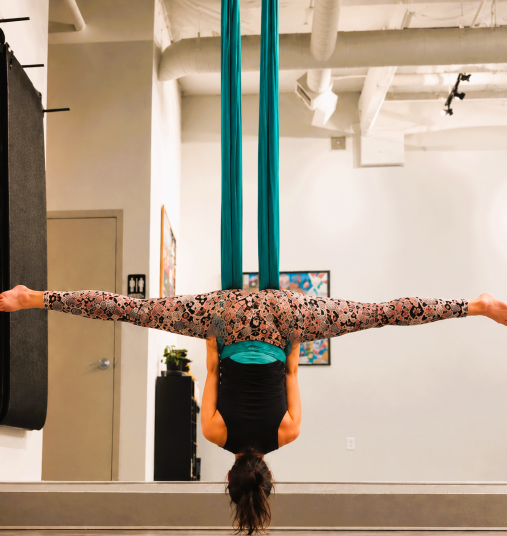
This idea has become particularly clear to me because I recently started taking aerial fitness classes. It’s hard. Although I was a gymnast throughout high school, it has been a long time. Starting aerial fitness as an adult is different from simply relaxing into a massage or taking a hot bath.

There are movements my body doesn't know how to do yet. There are things I have to practice repeatedly. There are moments when I'm wondering how I can get my body to bend like that. It takes effort and can be uncomfortable and frustrating, but I’ve wanted to try it for a long time, and I finally decided to do it.

Once I started doing it, I didn’t just experience the class as exercise. I experienced it as self-care because I was giving myself something I had wanted.

I was saying yes to a part of myself that wanted adventure, movement, challenge, play, and something outside of my normal routine. Now, I've already moved up to the next level. This makes me happy because it’s a reminder that I listened to myself and acted on my decision instead of waiting until I had more time or letting my fear of getting hurt stop me.

I wouldn’t have gotten to this place if I had kept putting it off until someday. The same goes for writing. I wouldn’t have a published book if I’d kept delaying the work. These kinds of choices don’t look like the gentle, aesthetic version of self-care we’re used to. That doesn’t mean that self-care can never be restful. It means it can also include commitment to what your heart is calling you to do.

What if writing for thirty minutes is also self-care?

What if protecting your creative time is self-care?

What if saying no to something that consumes your time so you can say yes to your book is self-care?

Different Chapters

Your life unfolds in chapters. This could be the chapter where you write the book, the chapter where you stop waiting for permission, or the chapter where you stop postponing what your heart wants you to do. Self‑care isn’t only escaping your life for an hour. It’s also creating a life you don’t need to escape from.

Your heart needs to express itself. And sometimes the most loving thing you can do for yourself is to write the first chapter, step into the studio, walk into the class, or begin the project, and give yourself permission to become the person you’ve been wanting to become.

Self‑care isn’t just tending to the life you already have. It’s creating the life your heart keeps asking you to live.


 Subscribe for your free “Decide to Write” Workbook and Author Contract to make writing more fun and easy!

Write From Joy

WRITING DOESN’T HAVE TO BE PAINFUL

When I found out that a friend of mine got engaged this past weekend, I didn’t just smile politely. Joy rose through me like champagne bubbles. My whole body lit up. I wasn’t anywhere near her when this happened, yet hearing about it made me feel lighter and more radiant as I honored her and the beautiful energy of love.

I brought this joy into my writing, and that’s why I’m here to tell you that your writing or art doesn’t have to come from sadness and suffering as you may have been led to believe. That doesn’t mean that something magical has to happen every day for you to write, because you can use joy you experience in small things such as a cup of tea or a morning walk or a smile from someone, or even secondhand joy of a happy event happening to someone else.

Writing From Joy Is Not Shallow

You hear about writing from pain, but almost never about writing from joy. Why do we assume that depth must come from agony?

What if some of your most creative writing could come from joy, bliss, expansion, and liveliness?

Joy is not the absence of depth. It’s not an extravagance or a silly emotion. It’s the experience of being fully present and alive.

Your attention is more focused and your senses are sharper. Think about the last time you experienced joy. Maybe it was a small thing such as seeing a hummingbird or a big thing such as falling in love.

Did you feel activated and energized? Now, imagine creating under the influence of that feeling. Imagine if pharmaceutical companies were able to turn that into a drug with no side effects. Well, you can create that yourself.

The Myth that Art Must Come From Suffering

For generations, writers have documented their darkest times such as poverty, heartbreak, addiction, grief, and loss. Their stories are compelling because they reveal something deeply human, and their suffering sometimes became intertwined with the work they created.

But somewhere along the way, we turned this into the belief that if they suffered, we must suffer for our art as well. We started believing that pain was the price for authenticity and that a person must sacrifice everything for their work.

We no longer need to inherit that story, and can create our own. That chapter has closed and we can write a new, evolved one. Writing doesn’t have to come from torment; it can come from bliss.

Use Joy to Activate Creative Flow

We may think of creative flow as something hat happens to us sometimes when all the right conditions are in place, but there are things we can do to create conditions that make flow more accessible.

One of those things is changing the emotional state from which we're approaching our creativity.

If you approach writing from a place of frustration, doubt, and insecurity, and treat it as if it’s one more thing on your task list that you don’t have time for, you’re burdening yourself under the weight of obligation and making it harder to access flow.

View Writing as Play, Not Punishment

We may have forgotten that writing can be fun. It can be a form of play instead of another chore we have to do that day. When we view writing the book as another stressor, our excitement dies down and so does our creativity.

What if you changed the relationship between you and your book? Instead of viewing it as a burden, what if it were an adventure?

You don’t know everything that’ll happen when you start writing even if you have a pretty good outline. You discover more about your characters and plot as you go along. That’s the magic of creating.

Your writing time is your playground. Your imagination gets to have fun. Let yourself experiment and write that strange scene or ridiculous dialogue. Give yourself permission to write something awful. None of this is etched in stone. You don’t have to be married to it.

Creativity isn’t an unruly child that needs to be controlled. It needs room to play.

Depth Doesn’t Require Pain

Pain is one way we become self-aware, but it is far from the only way.

You don't have to reopen every wound to be creative. You don't have to tap into sad feelings when you sit down at your computer because you've decided those emotions make you more creative.

Use the lessons you’ve learned and the experiences you’ve lived. You don’t have to drop into a dark emotional state to write even the darkest themes.

You can write betrayal, murder, distress, and grief while remaining anchored in your own bubble of bliss, because the emotional state you're creating from doesn't have to match the content you're writing about.

Writing from a light place can make it easier to handle difficult themes because you aren't drowning in them. You're the witness and the guide as you shape those themes into something meaningful.  

Access Joy on Demand

Instead of trying to think yourself into a creative state, run joy through your body before your write.

1. Recall a moment that genuinely made you happy.

It doesn't have to be a big thing. It could be something that happened that day or at another point in time: a nice meal, a hot shower, a song you like, a sunset, a hug, a funny conversation, being silly with your pet.  It’s a moment when everything else melted away and you could be fully present.  

Close your eyes and bring yourself back there.

Don't just remember what happened.

Remember how it felt.

2. Notice where the joy lives in your body.

Where do you feel it?

Do you find yourself breathing easier?

Maybe you smile.

Maybe you feel warmth in your stomach.

Don't analyze it. Just feel it.

3. Let the feeling expand and take over.

Imagine the sensation spreading through your body.

Let it move through your chest, your shoulders, your arms, your stomach, your legs, your face. This isn’t forced happiness or manufactured cheerfulness.

You're simply unlocking and expressing the happiness that's already available to you.

4. Let your nervous system register the feeling.

Stay in the present moment for a few breaths.

Savor this experience of having your heart be open and feeling lively and present.

5. Then write.

Use the joy as you create within it. Let it become the environment your creativity grows in.

You may be surprised by what becomes possible when you stop demanding that your creativity come from struggle.

The Side Effect

The more often you practice accessing joy before you write, the more you’ll notice it throughout your day. You’ll start savoring small moments of delight and creating joy intentionally, and your life will become more vibrant and creatively nourishing. As joy becomes a familiar, natural state to return to, you’ll slip into it faster, and the line between work and play will begin to blur.