
author motivation

Self-Care Isn’t Just Rest: It’s Writing the Book and Creating the Life You Really Want

When you think about self-care, you probably conjure up images of baths, candles, soft pajamas, warm drinks, and taking the weekend off. Sure, these things do matter. They can soothe the nervous system and restore the body. I enjoy these refreshing experiences as much as anyone.

But lately, I’ve been thinking about another form of self-care that doesn’t always feel relaxing and comforting in the moment. Sometimes self-care looks like doing the thing your heart has been asking you to do, and that thing may be hard. It could be writing the book, changing your career, learning something new, or going back to school.

It could mean stepping into the life you keep imagining but haven’t yet allowed yourself to live.

What If Your Heart Wants More Than Rest?  

There is nothing wrong with rest. It’s necessary since we are not machines, and we don't need to turn every moment of our lives into an opportunity for productivity. However, I think we've sometimes reduced self-care to the idea of feeling good right now.

That’s where I think we can miss something, because there are things that may not feel easy in the moment but leave you feeling alive and renewed. There are experiences that challenge you, stretch you, frustrate you, and require you to learn something new, and make you feel more like yourself.

Writing can be like that. You may sit down to write and discover that you don't know what you're doing. You may stare at a blank page or question your idea or change the plot midway, but this discomfort isn’t a sign that writing is wrong for you. It’s a sign that what your heart wants you to do will require growth. Taking the action will help you with that growth.

There’s a big difference between doing something that drains you because you feel obligated to do it and doing something difficult because your heart keeps calling you to do it.

Presence: The Self‑Care That Moves You Forward

In the “Power of Now,” Eckhart Tolle teaches that the mind pulls us into the past and future, away from the only place life actually happens, which is in the present moment.

Most aspiring authors don’t struggle because they lack ideas; they struggle because they aren’t present enough to write them. You may be thinking about how you’ll never finish the book or how no one will read it. These thoughts pull you out of the present moment and cause you to keep delaying action. By returning to the moment and writing the first sentence and then the first chapter, you’re giving yourself evidence that you can do it.

You can have the most lovely self‑care routine in the world and still feel like something is missing if there is a part of your life you continually refuse to live. Your future self is shaped by the choices you make now. Self‑care does not mean only tending to your present self. It should also be tending to your future self’s destiny.

Redefining Self-Care

I’ve realized the things that make you feel most alive may also be hard to do.

This idea has become particularly clear to me because I recently started taking aerial fitness classes. It’s hard. Although I was a gymnast throughout high school, it has been a long time. Starting aerial fitness as an adult is different from simply relaxing into a massage or taking a hot bath.

There are movements my body doesn't know how to do yet. There are things I have to practice repeatedly. There are moments when I'm wondering how I can get my body to bend like that. It takes effort and can be uncomfortable and frustrating, but I’ve wanted to try it for a long time, and I finally decided to do it.

Once I started doing it, I didn’t just experience the class as exercise. I experienced it as self-care because I was giving myself something I had wanted.

I was saying yes to a part of myself that wanted adventure, movement, challenge, play, and something outside of my normal routine. Now, I've already moved up to the next level. This makes me happy because it’s a reminder that I listened to myself and acted on my decision instead of waiting until I had more time or letting my fear of getting hurt stop me.

I wouldn’t have gotten to this place if I had kept putting it off until someday. The same goes for writing. I wouldn’t have a published book if I’d kept delaying the work. These kinds of choices don’t look like the gentle, aesthetic version of self-care we’re used to. That doesn’t mean that self-care can never be restful. It means it can also include commitment to what your heart is calling you to do.

What if writing for thirty minutes is also self-care?

What if protecting your creative time is self-care?

What if saying no to something that consumes your time so you can say yes to your book is self-care?

Different Chapters

Your life unfolds in chapters. This could be the chapter where you write the book, the chapter where you stop waiting for permission, or the chapter where you stop postponing what your heart wants you to do. Self‑care isn’t only escaping your life for an hour. It’s also creating a life you don’t need to escape from.

Your heart needs to express itself. And sometimes the most loving thing you can do for yourself is to write the first chapter, step into the studio, walk into the class, or begin the project, and give yourself permission to become the person you’ve been wanting to become.

Self‑care isn’t just tending to the life you already have. It’s creating the life your heart keeps asking you to live.


 Subscribe for your free “Decide to Write” Workbook and Author Contract to make writing more fun and easy!
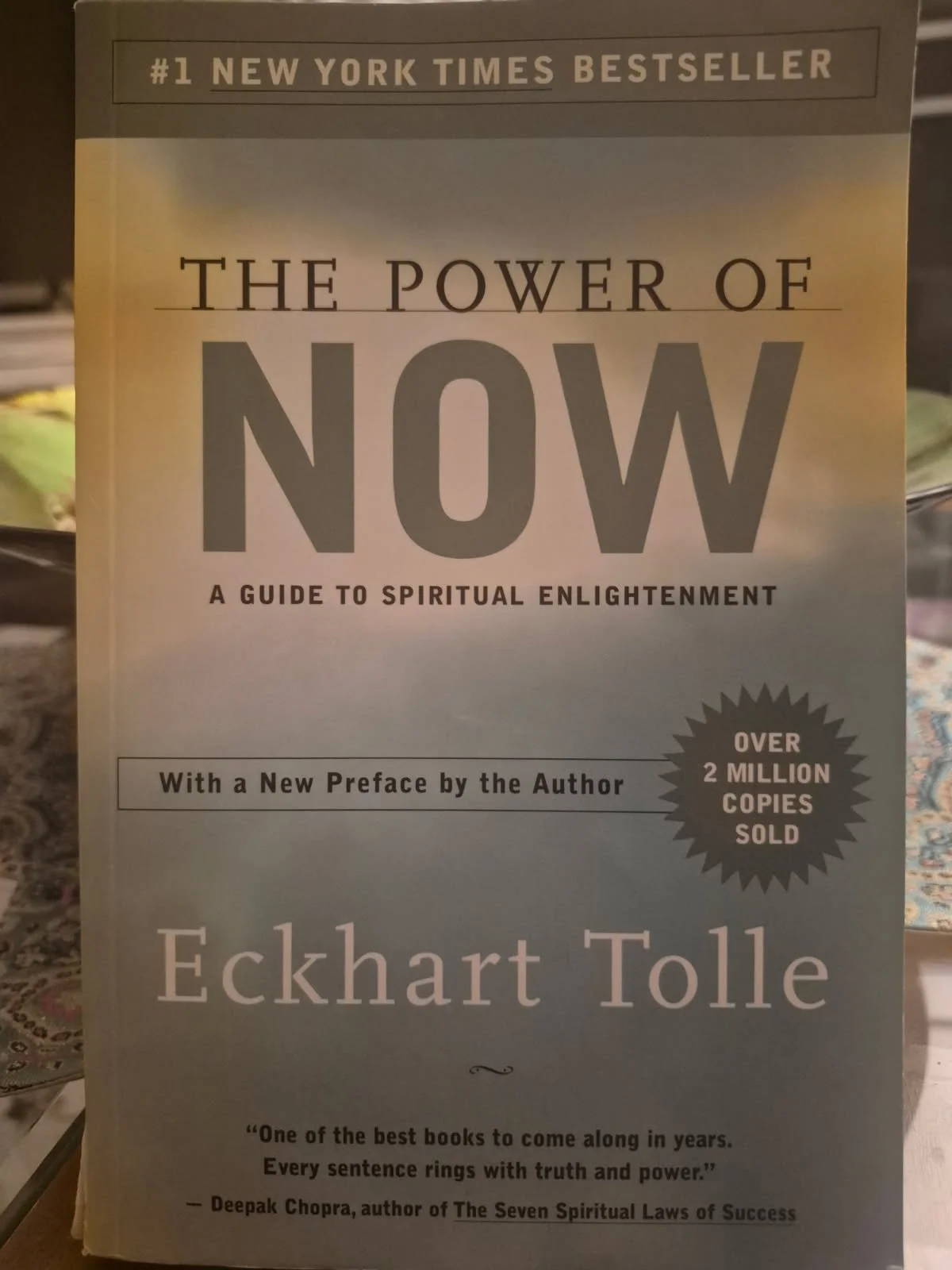

Eckhart Tolle's "The Power of Now" for Authors: How Presence Helps You Finally Write Your Book

Most aspiring authors believe their biggest challenge is lack of time, lack of clarity, or lack of confidence, but Eckhart Tolle’s The Power of Now reveals a deeper truth. The real obstacle is the mind’s constant pull away from the present moment.

Tolle’s work teaches that suffering comes from living in the past or future instead of the now. The only place a book can be written is here, in this moment, with the sentence in front of you.

Let’s explore how The Power of Now becomes a practical, powerful framework for helping you write your book.

Presence: The Core Teaching

Tolle’s central message is simple: Become aware of the mind instead of being controlled by it.

You need to come out of the constant identification with the thinking mind and become present to what is happening now.

For authors, this means stepping out of:

  • the past (“I should have written this years ago”)

  • the future (“What if nobody likes my book?”)

  • imagined judgments

  • comparison

  • perfectionism

  • fear of visibility

And returning to the only moment where writing is possible, which is NOW.

How Authors Lose the Present Moment

When a writer sits down to write, the mind starts narrating:

  • “This isn’t good.”

  • “I don’t know where this chapter is going.”

  • “Other writers are so much farther ahead.”

  • “I need to do more research first.”

You may be physically sitting in the present, but mentally or psychologically, somewhere else.

This mental scattering, and not the writing itself, is what makes writing feel hard. Presence quiets that noise.

The Past and Future Create Suffering

The book also explores how our relationship with the past and future can create suffering. Tolle’s teaching invites authors to release the past and return to what is actually happening now. You can’t rewrite last year. If you wish you would’ve started earlier, that’s another method of procrastination. The past can become a source of regret and presence turns that regret into action. You can’t go back in time but you can write today.

Future‑based fear is just as paralyzing and can be a source of anxiety:

  • “What if nobody buys it?”

  • “What if I get a bad review?”

  • “What if I publish it and nothing happens?”

There’s a difference between planning for the future and mentally living inside an imagined future. The author writing the first chapter does not need to solve the hypothetical problem of a negative review two years from now.

Presence brings the focus back to the page. The finished book is simply the accumulation of thousands of present moments in which you chose to participate in the creation of it. You don’t write a book by thinking about the whole book. You write it by writing today’s portion.

Presence shrinks the task from writing the whole book to writing one sentence and then you keep moving once you have momentum.   

Presence Creates Space for Creativity

When the mind is busy judging, comparing, and predicting, creativity suffocates. The creative mind needs room. You can have the thought that this book isn’t good without it being a fact. Presence allows authors to observe thoughts instead of obeying them. This creates space, and inside that space, writing becomes possible again.

Writing requires imagining, listening, noticing, exploring and observing. Presence opens the door to all of these.

Technique matters, and includes structure, character, and plot, voice, but you don’t necessarily have a writing problem. You may have a problem with the relationship with your own mind. Stop waiting to feel ready.  If your creative life depends on the perfect circumstances arriving first, you may spend a very long time waiting.

What can you write now, with the state you’re actually in?

A Simple Practice for Writers

  1. Stop.

  2. Return to the body.

  3. Notice your breathing.

  4. Now, go write what can be done today.

The perfect future never arrives. The past cannot be changed.  Your book can only be written one present moment at a time. Presence is not just a spiritual concept. It’s a writing strategy.

Many writers treat every writing session as an evaluation of their worth. Let writing be an experience of exploration, discovery, play and, joy. This is where creative flow lives.

Final Thoughts

What could you create if you stopped living in the past or future, and simply wrote the next page?

Your next chapter doesn’t require more time. It requires more presence. You don't become an author in some magical future moment when the book is finally finished. You become an author every time you choose to write.

When Resistance Shows Up, You May Be Closer to your goal Than You Think

There is a moment that arrives in every meaningful journey. This is a moment subtle enough to miss if you’re not paying attention, yet powerful enough to reroute your entire destiny. It happens when you’re moving toward something that matters such as a dream or goal that you’ve always wanted or a new chapter in life.

You begin with clarity. You take the first steps and gather momentum.

And then, resistance appears.

It doesn’t always arrive dramatically. Sometimes it slips in like a faint doubt or as procrastination or little things start going wrong which you must attend to. Or it comes with urgency, convincing you that everything is wrong, the timing is off, and you should turn back immediately.

Suddenly, you’re questioning everything.

You wonder whether you’re truly aligned. You start scanning your life for reasons why now isn’t the right time. You remember past disappointments and imagine future judgment. You tell yourself it’s not the right time or you need to wait until something else happens to proceed. You may even try to convince yourself that it’s not in alignment with you or it’s not what you really want.

And before you realize it, you’re considering stopping or giving up.

But what if resistance isn’t a warning?

Resistance Isn’t Usually a Red Light

We’ve been conditioned to believe that discomfort, fear, or doubt equals misalignment, but that’s not always true.

Sometimes the thing you’re working toward is so aligned that it requires you to grow into someone who can hold it. Growth is rarely comfortable.

Writing a book may ask you to be seen in ways you’ve never allowed. Changing careers may ask you to risk rejection and redefine your identity. Moving cities may ask you to release familiar routines and relationships. Starting a relationship may ask you to trust and be vulnerable. Pursuing a dream may ask you to stop hiding behind potential and step into embodiment.

The desire and timing can be right. Plus, you can still feel afraid. That doesn’t mean you need to stop.

Resistance Wears Many Masks

Resistance rarely says, “I’m afraid of change.” It prefers disguises.

It may sound like:

  • “I don’t have time.”

  • “I’ll do it when life calms down.”

  • “I need to figure out a few more things first.”

  • “What if people judge me?”

  • “It didn’t work last time.”

  • “My family needs me.”

  • “Maybe this isn’t meant for me.”

  • “I’ll come back to it someday.”

  • “I should start over.”

These excuses often sound logical and responsible but they’re really just the ego trying to protect you from stepping out of your comfort zone.

You are approaching a threshold where your old identity cannot follow.

And that identity, which is built from past experiences and patters, begins to panic.

You hide behind being busy or perfectionism or overthinking. Resistance is rarely irrational. It’s often the ego’s strategy to keep you in the same place.

The ego isn’t the enemy. It’s the part of you that wants predictability. It would rather stay in a familiar emotional territory, even one built from disappointment or rejection, than risk the unknown.

This is why people remain in jobs that drain them, relationships that harm them, and repeat painful patterns. The familiar feels safer than the unfamiliar.

Even negative emotions can become a kind of emotional home. Disappointment, rejection, and doubt can feel predictable and familiar. However, change requires temporary discomfort and asks you to release old stories and versions of yourself. And that’s often when resistance becomes loudest.

You start to believe that you should stay where you are because at least it’s familiar. But the place you know is not always the place you’re meant to remain.

Resistance Becomes Louder as You Get Closer

I’ve seen this pattern in my own life again and again. Every time I’ve been close to something meaningful, resistance has shown up like clockwork.

Before I understood this, I misinterpreted it. I assumed the discomfort meant misalignment, so I would stop, lose momentum, and tell myself I’d return later. When I returned, the energy had changed and the momentum was gone. Sometimes I had to start all over again.

Then, when I reached another point of progress, resistance appeared again.

This is how people get trapped in cycles of starting, stopping, and starting over.

They begin the book, abandon it, begin another. They pursue the career change until the first rejection. They start building a new life, feel discomfort, and retreat.

Why did I stop when I was so close?

I misinterpreted resistance as intuition.

Intuition and Fear are NOT the Same

Intuition is quiet, clear, and simple. Fear is loud, dramatic, and full of stories.

When something truly needs to be released, you can drop it without drama. There’s clarity and even relief. On the other hand, resistance creates elaborate stories.

It tells you people will judge you, reminds you of every past failure, and convinces you that timing must be perfect. It comes up with various reasons to delay.

And if you’re a writer or creative, you know how persuasive a story can be, but the story isn’t necessarily truth.

Fear Can Be a Sign of Expansion

Fear doesn’t mean you’re weak. It means you’re human. It means you’re expanding, so instead of attacking yourself, bring awareness to the resistance.

First, acknowledge it.

You might say or think:

“I’m noticing fear.”

“I’m noticing the urge to stop.”

“I’m noticing the story I’m creating.”

You can even thank the part of you that’s trying to protect you.

Then ask:

Is this a sign to stop, or is this simply the discomfort of becoming the person who can receive what I want? Would I rather experience the temporary discomfort of growth, or the familiar pain of staying stuck?

If the answer doesn’t appear, take a pause, but don’t immediately quit.

Bring awareness to the fear. Look at the story. Ask whether the desire still matters beneath the discomfort.

If it does, take one more step.

Write one more page. Send one more application. Make one more call. Take one more class. Move one piece of the dream forward. You just need to stay connected to your direction.

Momentum Is Sacred. Protect It.

Momentum is one of the most powerful forces in personal transformation.

When you’re already moving, each step makes the next step easier. You’re connected to your desire. You remember why you began. When you stop, you not only lose time, but more importantly, you lose momentum.

When you return, you often have to rebuild everything from the beginning, especially with creative work.

A book written months later is not the same book. The version of you who began is no longer the version of you who returns.

If you have momentum, protect it like gold. If needed, you can still slow down, rest, or adjust, but avoid abandoning the entire thing.

Celebrate the Resistance: It Means You’re Close

You don’t have to celebrate fear itself, but you can celebrate what it reveals.

You’re moving, growing, and expanding beyond the familiar.

The next time doubt appears, ask yourself if you’re being guided to stop or being asked to grow.

What if resistance isn’t viewed as a warning but as the moment that you release the past stories?

Then, resistance isn’t a red light. It’s the doorway to your breakthrough. You just need to keep going and protect your momentum.

Write From Joy

WRITING DOESN’T HAVE TO BE PAINFUL

When I found out that a friend of mine got engaged this past weekend, I didn’t just smile politely. Joy rose through me like champagne bubbles. My whole body lit up. I wasn’t anywhere near her when this happened, yet hearing about it made me feel lighter and more radiant as I honored her and the beautiful energy of love.

I brought this joy into my writing, and that’s why I’m here to tell you that your writing or art doesn’t have to come from sadness and suffering as you may have been led to believe. That doesn’t mean that something magical has to happen every day for you to write, because you can use joy you experience in small things such as a cup of tea or a morning walk or a smile from someone, or even secondhand joy of a happy event happening to someone else.

Writing From Joy Is Not Shallow

You hear about writing from pain, but almost never about writing from joy. Why do we assume that depth must come from agony?

What if some of your most creative writing could come from joy, bliss, expansion, and liveliness?

Joy is not the absence of depth. It’s not an extravagance or a silly emotion. It’s the experience of being fully present and alive.

Your attention is more focused and your senses are sharper. Think about the last time you experienced joy. Maybe it was a small thing such as seeing a hummingbird or a big thing such as falling in love.

Did you feel activated and energized? Now, imagine creating under the influence of that feeling. Imagine if pharmaceutical companies were able to turn that into a drug with no side effects. Well, you can create that yourself.

The Myth that Art Must Come From Suffering

For generations, writers have documented their darkest times such as poverty, heartbreak, addiction, grief, and loss. Their stories are compelling because they reveal something deeply human, and their suffering sometimes became intertwined with the work they created.

But somewhere along the way, we turned this into the belief that if they suffered, we must suffer for our art as well. We started believing that pain was the price for authenticity and that a person must sacrifice everything for their work.

We no longer need to inherit that story, and can create our own. That chapter has closed and we can write a new, evolved one. Writing doesn’t have to come from torment; it can come from bliss.

Use Joy to Activate Creative Flow

We may think of creative flow as something hat happens to us sometimes when all the right conditions are in place, but there are things we can do to create conditions that make flow more accessible.

One of those things is changing the emotional state from which we're approaching our creativity.

If you approach writing from a place of frustration, doubt, and insecurity, and treat it as if it’s one more thing on your task list that you don’t have time for, you’re burdening yourself under the weight of obligation and making it harder to access flow.

View Writing as Play, Not Punishment

We may have forgotten that writing can be fun. It can be a form of play instead of another chore we have to do that day. When we view writing the book as another stressor, our excitement dies down and so does our creativity.

What if you changed the relationship between you and your book? Instead of viewing it as a burden, what if it were an adventure?

You don’t know everything that’ll happen when you start writing even if you have a pretty good outline. You discover more about your characters and plot as you go along. That’s the magic of creating.

Your writing time is your playground. Your imagination gets to have fun. Let yourself experiment and write that strange scene or ridiculous dialogue. Give yourself permission to write something awful. None of this is etched in stone. You don’t have to be married to it.

Creativity isn’t an unruly child that needs to be controlled. It needs room to play.

Depth Doesn’t Require Pain

Pain is one way we become self-aware, but it is far from the only way.

You don't have to reopen every wound to be creative. You don't have to tap into sad feelings when you sit down at your computer because you've decided those emotions make you more creative.

Use the lessons you’ve learned and the experiences you’ve lived. You don’t have to drop into a dark emotional state to write even the darkest themes.

You can write betrayal, murder, distress, and grief while remaining anchored in your own bubble of bliss, because the emotional state you're creating from doesn't have to match the content you're writing about.

Writing from a light place can make it easier to handle difficult themes because you aren't drowning in them. You're the witness and the guide as you shape those themes into something meaningful.  

Access Joy on Demand

Instead of trying to think yourself into a creative state, run joy through your body before your write.

1. Recall a moment that genuinely made you happy.

It doesn't have to be a big thing. It could be something that happened that day or at another point in time: a nice meal, a hot shower, a song you like, a sunset, a hug, a funny conversation, being silly with your pet.  It’s a moment when everything else melted away and you could be fully present.  

Close your eyes and bring yourself back there.

Don't just remember what happened.

Remember how it felt.

2. Notice where the joy lives in your body.

Where do you feel it?

Do you find yourself breathing easier?

Maybe you smile.

Maybe you feel warmth in your stomach.

Don't analyze it. Just feel it.

3. Let the feeling expand and take over.

Imagine the sensation spreading through your body.

Let it move through your chest, your shoulders, your arms, your stomach, your legs, your face. This isn’t forced happiness or manufactured cheerfulness.

You're simply unlocking and expressing the happiness that's already available to you.

4. Let your nervous system register the feeling.

Stay in the present moment for a few breaths.

Savor this experience of having your heart be open and feeling lively and present.

5. Then write.

Use the joy as you create within it. Let it become the environment your creativity grows in.

You may be surprised by what becomes possible when you stop demanding that your creativity come from struggle.

The Side Effect

The more often you practice accessing joy before you write, the more you’ll notice it throughout your day. You’ll start savoring small moments of delight and creating joy intentionally, and your life will become more vibrant and creatively nourishing. As joy becomes a familiar, natural state to return to, you’ll slip into it faster, and the line between work and play will begin to blur.